Not every holiday gesture needs a garland, wreath, or tree. Some of the most convincing seasonal changes happen at a much smaller scale: a candle on the bar, a new arrangement in a familiar vessel, a tray prepared for guests, or one touch of green against a pale sculptural object.
These details work because they change how the room feels without changing what the room is.
1. STYLE THE BAR BEFORE YOU NEED IT
A ready bar makes the room feel welcoming even before anyone arrives. Place a Clear Entertaining Bucket on a Woven Gallery Tray with the glassware you actually plan to use. Add a Ripple Glass Pitcher for water or a simple mixer. The setup is functional first, but the materials—clear glass and woven texture—also create a polished seasonal moment.
2. ADD GREEN TO SOMETHING YOU ALREADY OWN
A small natural accent can make an everyday bowl feel newly considered. Preserved moss in a Freeform White Bowl is one example. Greenery in a Cobalt Stripe Cachepot is another. This is often more effective than adding another standalone decoration because the seasonal layer grows out of objects already in the room.
3. CHANGE THE SCENT, NOT THE COLOR SCHEME
Fragrance can signal the season without changing the visual identity of a room. An opal-glass candle is especially useful because it contributes softly to the styling while adding atmosphere. It does not need to be surrounded by holiday objects. In fact, it is often more elegant when it is not.
4. SET OUT ONE BEAUTIFUL TRAY
A tray makes hospitality visible. Use one for drinks, coffee, a few wrapped chocolates, or simply the objects that tend to scatter when guests arrive. The Woven Gallery Trays can shift from everyday coffee-table styling to entertaining without feeling themed.
5. CREATE A SMALL FLORAL MOMENT
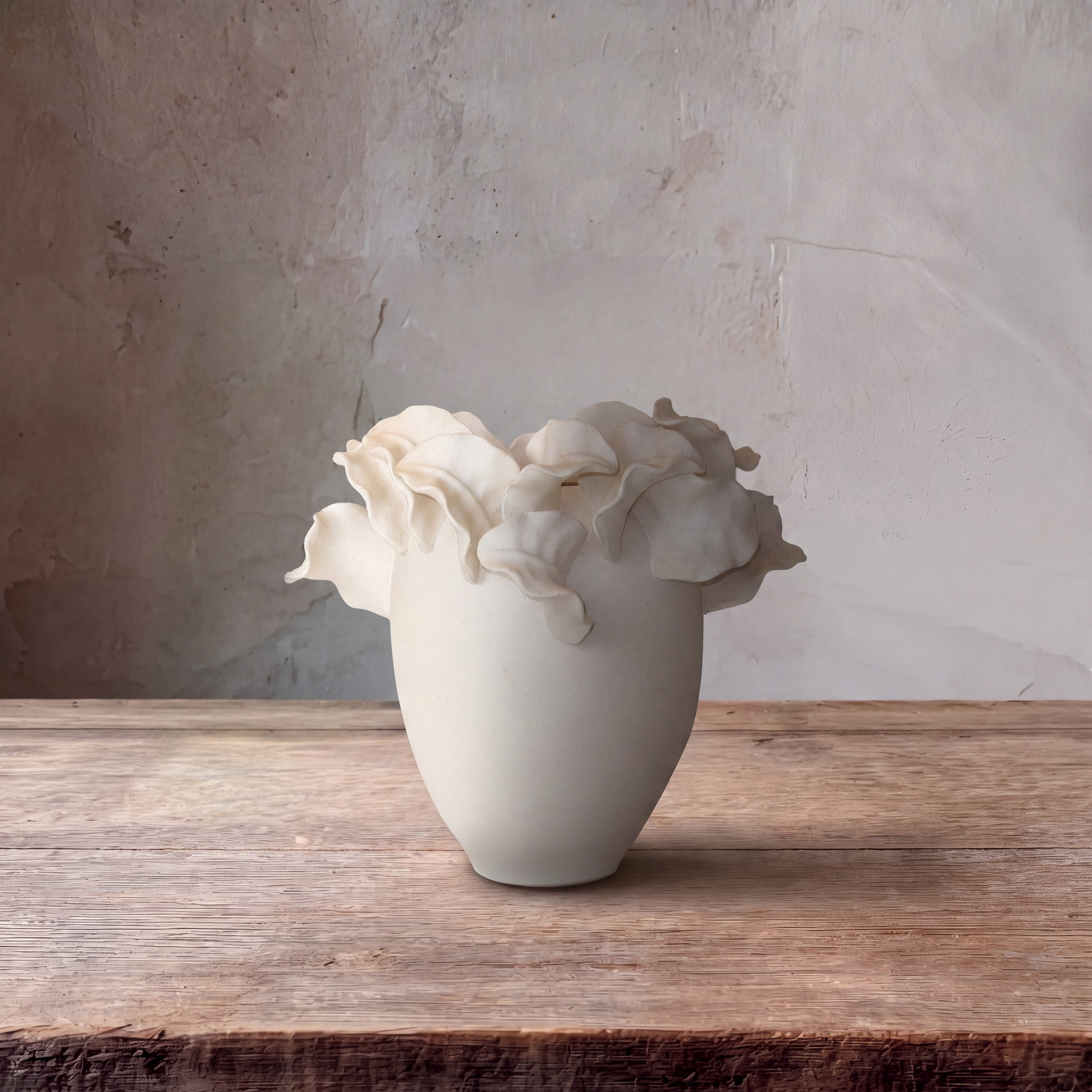
A large arrangement is not always necessary. A Linen Pot Orchid, Glass Orchid Arrangement, or a few simple stems in a sculptural vessel can soften a dining table or powder room. The detail reads as care rather than decoration.
6. REPEAT ONE QUIET DETAIL
A few white elements, a touch of green in two rooms, or the same candlelight repeated across a dining room and living room can make the whole house feel connected. The key is restraint. Repetition should create rhythm, not uniformity.
When guests enter a home, they rarely inventory the décor. They notice the feeling: the light, whether the room seems ready for them, whether the details have been considered. This is why small gestures can do so much.
Studio Home’s holiday approach is less about adding a seasonal layer everywhere and more about choosing the places where a little extra attention changes the experience of the room.